Why Only a Few Rooms Smell Like Sewage & How Smoke Testing Helps
Persistent sewer odor in just a few hotel or apartment rooms? Learn why it happens and how smoke testing tracks hidden plumbing leaks.
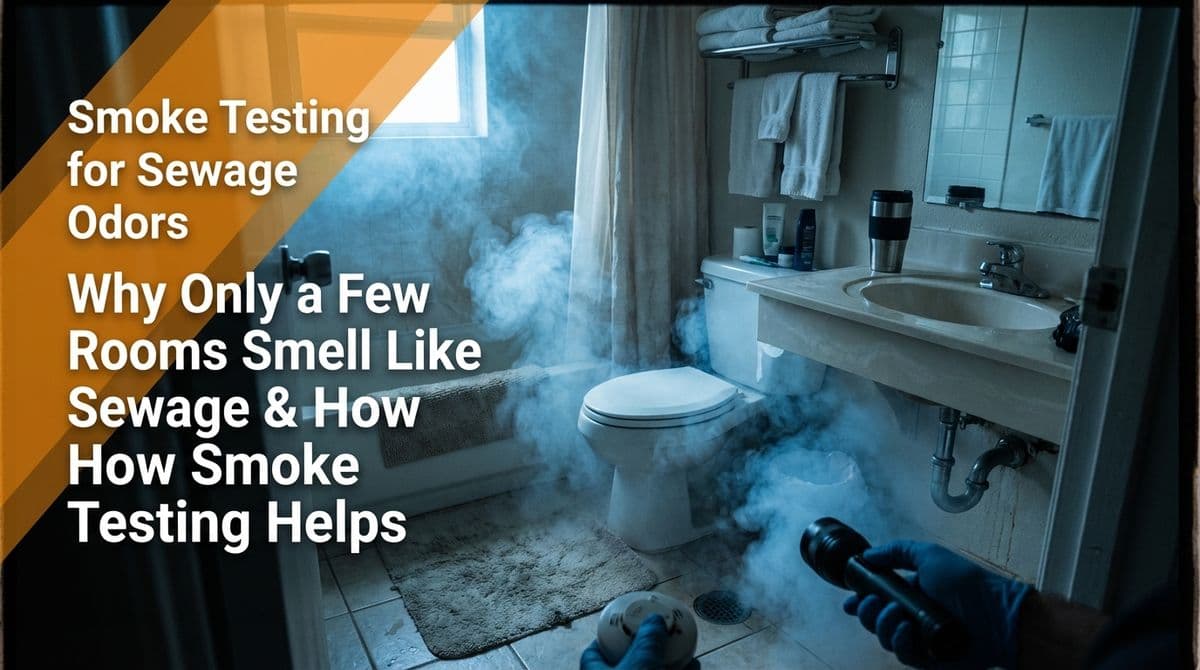
Why Only a Few Rooms Smell Like Sewage?
We recently got a call from a hotel manager — we’ll call her Kelly — who was at her wits’ end. Her hotel had a persistent sewer odor, but here’s the strange part: it was only in two guest rooms on the second floor and two on the third. The first and fourth floors were perfectly fine.
Kelly told us they had already tried just about everything:
- Replaced the toilet wax rings
- Snaked the drain lines
- Opened walls looking for obvious leaks
- Used “mint testing” to try to track odors
Even after all of that, those same few rooms still had a terrible sewer smell. That’s when they were referred to us specifically for plumbing smoke testing.
Why Sewer Odors Can Show Up in Just a Few Units
In multi‑unit buildings — hotels, apartments, condos — the plumbing system is interconnected, but that doesn’t mean every problem shows up everywhere. In fact, it’s very common for a sewer odor to affect only a handful of rooms.
Here are a few reasons we often see:
- Localized pipe cracks or loose fittings behind a bathroom wall
- Dry or faulty traps in a sink, tub, or floor drain in just one room stack
- Improper or damaged vent piping serving a specific vertical line of rooms
- Hidden openings around cleanouts or old repairs that were never sealed properly
Because sewer gas follows the path of least resistance, it often escapes through a single weak spot in just a few rooms, even though the rest of the building shares the same main system.
Why the Usual Fixes Didn’t Work for This Hotel
Kelly’s team did what most property managers would do first:
- Wax ring replacement: A bad toilet seal is a common odor source, but not the only one.
- Snaking the lines: Good for clogs, not great for finding hidden cracks or vent issues.
- Opening walls: You only see the area you cut into. Leaks can be a few feet away or in a different direction.
- Mint testing: This can work in some cases, but the scent isn’t as visible or traceable as smoke.
After all that effort, the odor was still there, which told us we were probably dealing with a hidden leak or vent problem somewhere in that vertical line of rooms. That’s exactly the kind of situation where smoke testing shines.
How Plumbing Smoke Testing Works in a Multi‑Story Building
On Kelly’s call, one of her main questions was where we’d test from and whether it would affect the rest of the hotel. For most hotels and multi‑unit buildings, we typically introduce smoke from the roof vents.
Here’s what that looks like in plain language:
- We bring a specialized, non‑toxic smoke generator to the site.
- We seal off specific points in the plumbing system as needed.
- We introduce smoke into the vent system — often from the roof.
- The smoke fills the plumbing system and follows the path pipes take.
- Wherever there is a crack, loose fitting, bad seal, or open connection, smoke will escape into the building.
The key thing Kelly needed to understand: the smoke doesn’t “choose” one pipe. It can fill the entire connected system. That means if there are leaks in other rooms or floors, those will show up too — which is actually a good thing. If you’re going to test, you might as well find all the problems.
Is Smoke Testing Safe for Guests and Staff?
This is usually the next concern we hear from hotel and property managers. The answer is yes, when done correctly by a professional, smoke testing is:
- Non‑toxic and non‑staining – The smoke we use is designed for building diagnostics.
- Temporary – It dissipates quickly once the test is complete and we ventilate the area.
- Controlled – We coordinate timing so it causes minimal disruption to guests.
We walk management through what to expect, which rooms might see smoke, and how long the process will take. In many cases, we can focus on specific stacks or wings of the building to limit the impact.
What Smoke Testing Can Reveal in Problem Rooms
In situations like Kelly’s hotel — a few smelly rooms on the second and third floors only — smoke testing can help pinpoint issues such as:
- A cracked or misaligned pipe in the wall or ceiling between floors
- A failed vent connection behind a chase serving just those rooms
- A forgotten open pipe or cleanout hidden behind a remodel
- Improperly capped lines from old fixtures that were removed
Instead of guessing and opening walls blindly, we watch for exactly where the smoke appears in the building. That visual confirmation often saves both time and demolition costs.
Practical Tips for Property Managers Dealing With Sewer Odors
If you’re responsible for a hotel or multi‑unit building and you’re facing a persistent odor in just a few units, here’s how we recommend approaching it:
- Document the problem rooms and floors – Note which units are affected and when guests notice the smell most.
- Check the simple stuff first – Make sure P‑traps aren’t dry, fixtures are used regularly, and access panels are sealed.
- Track your previous repairs – List what’s already been tried (wax rings, snaking, wall openings, etc.). This helps avoid repeating work.
- Call in a pro for smoke testing if the odor persists after basic fixes. At that point, guessing gets expensive.
By the time Kelly called us, her team had already done everything they reasonably could. Bringing in smoke testing was the logical next step to actually see where the system was leaking, instead of chasing smells and hunches.
When You’re Ready to Stop Guessing
A persistent sewer odor in just a few rooms is more than just a nuisance — it affects guest satisfaction, online reviews, and occupancy. When basic repairs don’t solve it, smoke testing gives you a way to find hidden plumbing leaks quickly and with much more certainty.
If your hotel, apartment building, or multi‑unit property keeps getting complaints from the same few units, it may be time to look inside the plumbing system itself. That’s exactly what smoke testing is designed to do, and it’s why property managers like Kelly call us when they’re ready to stop guessing and finally track that odor to its source.